A Defence Deal Built Around Domestic Capacity
Canada’s latest military procurement decision is being framed not only as a vehicle order, but as part of a wider effort to strengthen the country’s defence industry. Prime Minister Mark Carney announced Thursday that General Dynamics Land Systems-Canada will become Ottawa’s new strategic partner for expanding key military capabilities.
Nearly $2 Billion Over Four Years
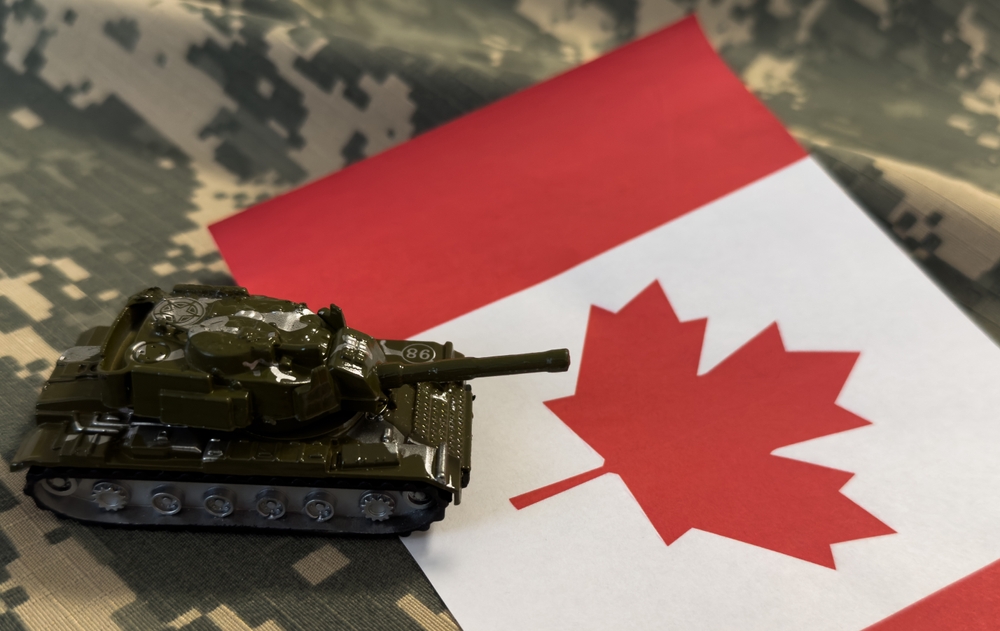
The agreement will see the federal government pay close to 2 billion dollars over four years for 190 additional armoured combat support vehicles. The new order will expand the Canadian Army’s fleet from 360 vehicles to 550.
Announcement Made in London, Ontario
Carney unveiled the partnership at the company’s plant in London, Ontario, where GDLS-Canada has long played a central role in producing armoured vehicles for the Canadian military.
A Supplier With Decades of History
General Dynamics Land Systems-Canada has supplied armoured vehicles to Ottawa since the late 1970s. The Canadian operation is part of General Dynamics, whose parent company is headquartered in Reston, Virginia.
First Company Chosen Under New Partnership Model
The federal government described GDLS-Canada as the first strategic partner selected since Ottawa introduced a new partnership framework in May. That model is intended to let companies work more closely with government on the sovereign capabilities required by Canada’s armed forces.
What Ottawa Expects From Strategic Partners
Companies chosen under the framework are expected to invest in Canadian research, domestic supply chains and local employment. In return, the government plans to act as an anchor customer, accelerate approvals and help selected firms pursue export opportunities.
Carney Links the Deal to Canadian Security
Carney said the London plant has spent nearly five decades turning Canadian industrial skill into military capability. He presented the new agreement as a renewal of that strength and emphasized that the vehicles will be produced in Canada by Canadian workers.
A Complicated Link to U.S. Defence Reliance
The announcement comes after Carney previously pledged to reduce Canada’s dependence on U.S. military suppliers. As recently as April, he said Canada should no longer send 70 cents of every defence dollar to the United States.
Canadian Jobs at the Centre of the Message
Carney argued that the contract will still deliver major domestic benefits. He said the partnership will create and sustain more than 6,000 high-paying Canadian jobs each year over the next eight years.
More Than 600 Canadian Suppliers Involved
The Prime Minister said the work at GDLS-Canada depends on a broad supply network that includes more than 600 Canadian suppliers across over 100 communities. He described each vehicle as the result of a national chain of manufacturing, engineering and technical expertise.
Examples Across the Country
Carney pointed to InterPro steelworkers in Regina, who produce advanced armour; Thales Canada engineers in Saint-Laurent, Quebec, who design night vision and thermal imaging systems; and IMP Aerospace & Defence electricians in Enfield, Nova Scotia, who build specialized components.
Part of a Larger Defence Spending Shift
The vehicle order follows a major increase in military spending announced in Carney’s first budget last November. The government committed more than 84 billion dollars in additional defence funding over five years, a short-term boost described as the largest since the Korean War.
Canada Seeks Greater Military Readiness
Carney has said Canada can no longer assume it can rely on the United States for protection. The new partnership is therefore being positioned as a way to preserve industrial capacity, expand production and support the Canadian Army’s operational needs.
Why the Timing Matters
David Perry, president of the Canadian Global Affairs Institute, said keeping work flowing to the London facility is important if Canada wants to maintain defence production capacity. He argued that suppliers need contracts at the right time to keep facilities and skilled workforces active.
Keeping the Production Line Active
Perry said the contract matters because it helps keep the GDLS-Canada plant, its production line and its workforce running at a strong pace. For Ottawa, the agreement serves both a military purpose and an industrial one, linking army modernization with the protection of Canadian defence manufacturing capacity.