Trade fight loses urgency in Washington
For months, officials, companies and trade analysts in Washington expected the future of the USMCA to become one of the major political battles of the spring and summer.
Instead, the war with Iran has absorbed much of the White House’s attention and pushed the North American trade pact out of the spotlight.
To borrow Harold Macmillan’s well-known phrase, “Events, dear boy, events.” In this case, foreign policy has reshaped the political calendar and lowered the temperature around trade.
USMCA slips into the background
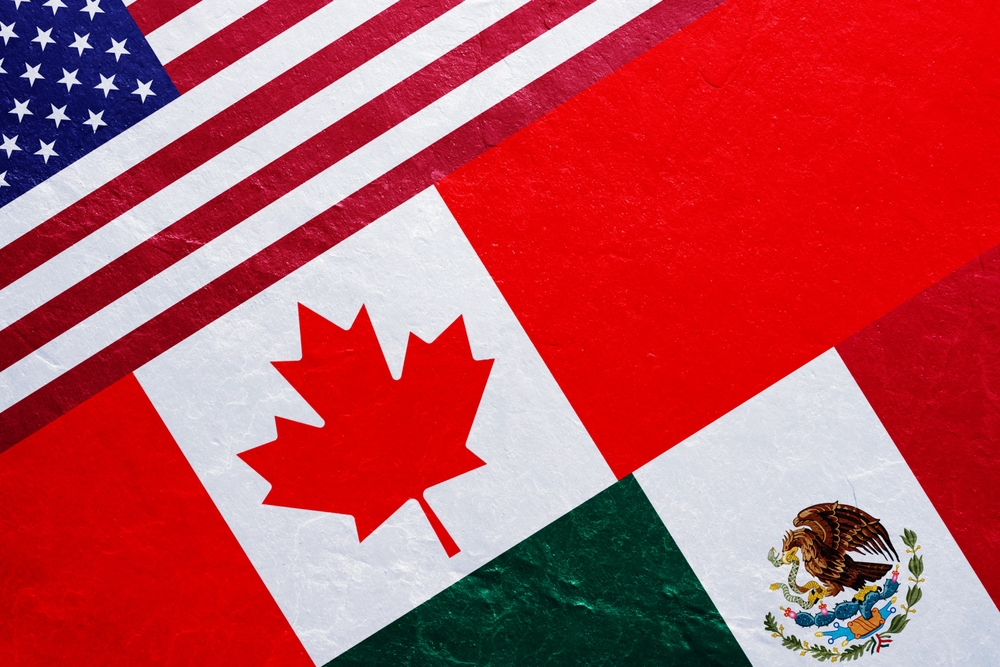
The agreement linking the United States, Canada and Mexico had been expected to face a noisy debate over renewal, enforcement and possible changes.
Earlier this year, some feared Washington could use the review process to pressure Canada and Mexico or even raise the possibility of withdrawal.
President Donald Trump had already shown less enthusiasm for the deal he once signed, creating uncertainty over how aggressively his administration would handle the next phase.
Washington takes a more measured stance
With the Iran conflict now dominating the administration’s agenda, the United States has avoided the most confrontational path.
Washington has confirmed that it will not extend the agreement for another 16 years at this stage, but it has also stopped short of more drastic action.
That approach has reduced the immediate risk of a major trade rupture in North America.
Tariffs have already changed the relationship
Part of the restraint reflects a view within the administration that North American trade has already been reshaped.
U.S. Trade Representative Jamieson Greer has argued that the White House’s tariff strategy has altered the economic relationship with Canada and Mexico enough to make a more aggressive USMCA confrontation unnecessary.
Still, if the issue becomes driven more by politics than economics, the U.S. auto industry could be among the sectors most exposed to damage.
China strategy depends on North America
The timing matters because Washington’s broader effort to recalibrate its relationship with China depends partly on stronger cooperation with Canada and Mexico.
Creating uncertainty around the continental trade framework could undermine that goal.
Arturo Sarukhan, Mexico’s former ambassador to the United States, described such a move in World Cup terms as “a huge own goal”.
July meeting avoids confrontation
The virtual meeting held on 1 July between the three countries had once been viewed as a possible flashpoint.
Instead, the discussions were subdued.
The United States has started formal talks with Mexico and remains in contact with Canadian officials, suggesting the process is moving forward without the political drama many had expected.
Midterms may encourage caution
With midterm elections approaching, analysts expect the calmer tone to continue.
A trade crisis with Canada and Mexico could create economic and political risks at a moment when the administration is already managing war, inflation and foreign policy pressure.
That makes steady diplomacy more attractive than brinkmanship.
Canada focuses on tariffs
Prime Minister Mark Carney has said he will not rush into a bad agreement, while remaining open to a deal if the right terms emerge.
Dominic LeBlanc, Canada’s minister responsible for U.S. trade discussions, said Ottawa is now focused on “substantive discussions” over U.S. tariffs affecting Canadian steel, aluminum, autos and lumber.
Although the USMCA has shielded much of continental trade from Trump’s tariffs, those Canadian sectors continue to face U.S. levies ranging from 10% to 50%.
A 10-year clock begins
The decision not to extend the agreement now starts a 10-year countdown.
If no extension is reached within that period, the USMCA will expire.
For the moment, however, annual reviews and quieter negotiations have replaced the more dramatic confrontation that many businesses and policymakers had feared.