Ottawa pitches Canada as a reliable supplier
Canada used the Global Energy Show in Calgary to present itself as a stable energy partner at a time of growing global uncertainty.
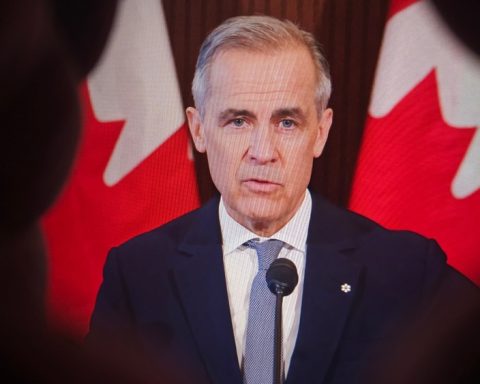
Federal Natural Resources Minister Tim Hodgson told international delegates that Canada can provide the energy supply the world needs in a volatile geopolitical environment.
Energy policy becomes security policy
Hodgson said Canada is democratic, reliable and “once again open for business.”
His message came as conflict in the Middle East continues to unsettle global energy markets and as Ottawa looks to strengthen Canada’s role as a dependable exporter of energy.
Global Energy Show draws international attention
This year’s Global Energy Show was expected to attract about 30,000 attendees.
Organizers said a larger share of visitors were expected from outside Canada than in previous years, reflecting rising international interest in secure energy supply.
Canada says it is ready to move
Hodgson told the audience that energy policy is no longer just about production and prices.
It is now also economic policy, security policy, trade policy and investment policy. He said the world is not waiting for Canada, but Canada is also not standing still.
Pipeline debate returns to the spotlight
Behind the optimistic federal message, however, questions remain over whether Canada can actually deliver major new energy infrastructure.
A proposed West Coast oilsands pipeline has become a major test of whether federal and provincial cooperation can turn into real private-sector investment.
Alberta pushes for a new route to the coast
At last year’s energy show, Alberta Premier Danielle Smith called for a new bitumen pipeline to the northwest coast, with industry eventually taking the lead.
The Alberta government now aims to submit an application by July 1 to the federal major projects office, although the pipeline still has no private-sector sponsor.
Pipeline tied to carbon capture project
Alberta and Ottawa signed a broad energy agreement late last year outlining conditions for a new West Coast oil pipeline.
Under that arrangement, the pipeline is linked to the massive Pathways carbon storage project, meaning progress on one is tied to progress on the other.
Cenovus CEO questions the framework
Cenovus Energy chief executive Jon McKenzie said the renewed cooperation between Alberta and Ottawa is encouraging.
But he warned that the current policy framework does not give oilsands producers the confidence they need to invest in the production growth required to fill a new pipeline.
Carbon levy remains a major concern
McKenzie criticized the industrial carbon tax, saying it should be revoked.
He argued that, just as the retail carbon tax made life more expensive for Canadians, the industrial carbon tax makes Canadian energy investment less competitive and pushes capital away from the oilsands.
Investment certainty or investment risk?
McKenzie said confirming the carbon tax does not create investment certainty.
Instead, he said it confirms that Canada’s regulatory regime is becoming increasingly uncompetitive compared with other energy-producing jurisdictions.
Pathways project sets emissions target
Alberta and Ottawa have agreed to cut carbon dioxide emissions by 16 megatonnes by 2045 through the Pathways project.
Cenovus and four other major oilsands producers are leading the plan, which would capture carbon dioxide from several oilsands sites in northeastern Alberta and transport it to a storage hub near Cold Lake.
A costly project with no revenue
McKenzie questioned how Canada and Canadians would benefit from the project.
He said Pathways does not generate revenue and would simply add another cost burden for industry and both levels of government.
Cost estimates raise doubts
McKenzie estimated that a project the size of Pathways would cost between $20 billion and $30 billion.
He argued that the project would reduce global emissions by only a very small amount, making it difficult to justify as a use of public and private funds.
Private financing looks difficult
The Cenovus CEO also said the proposed pipeline is not financeable by the private sector under current conditions.
He said there appears to be an assumption that Canadian oil and gas producers will invest tens of billions of dollars to grow production and support a one-million-barrel-a-day pipeline to the West Coast.
Oilsands producers remain cautious
McKenzie said that assumption does not match current industry behavior.
Canadian oilsands producers are not investing much beyond sustaining capital today, he said, because the investment regime is not competitive enough to justify major expansion.
Alberta wants national interest status
The Alberta government wants the pipeline designated as a project of national interest by October.
The province is also aiming to begin construction as early as September 2027, though that timeline will depend on regulatory approval, political coordination and investor confidence.
Smith says execution is the real test
Premier Danielle Smith acknowledged that signing an agreement is only the first step.
During an onstage discussion at the conference, she said the fact that Alberta and Ottawa put the plan on paper shows both sides are committed to achieving the outcome.
Investment depends on proof
Smith said the business sector will need to see progress before investment follows.
She argued that if governments can demonstrate they are meeting targets, the private sector may gain confidence in the project.
Canada’s energy ambition meets reality
The Global Energy Show highlighted a central tension in Canada’s energy strategy.
Ottawa wants to present the country as a dependable supplier in a turbulent world, while Alberta wants new export capacity. But industry leaders say major investment will remain difficult unless the regulatory and carbon pricing framework becomes more competitive.
A pipeline test for Canadian energy policy
The proposed West Coast pipeline has become more than an infrastructure project.
It is now a test of whether Canada can align climate policy, energy security, private capital and global demand into a plan that producers are actually willing to finance.