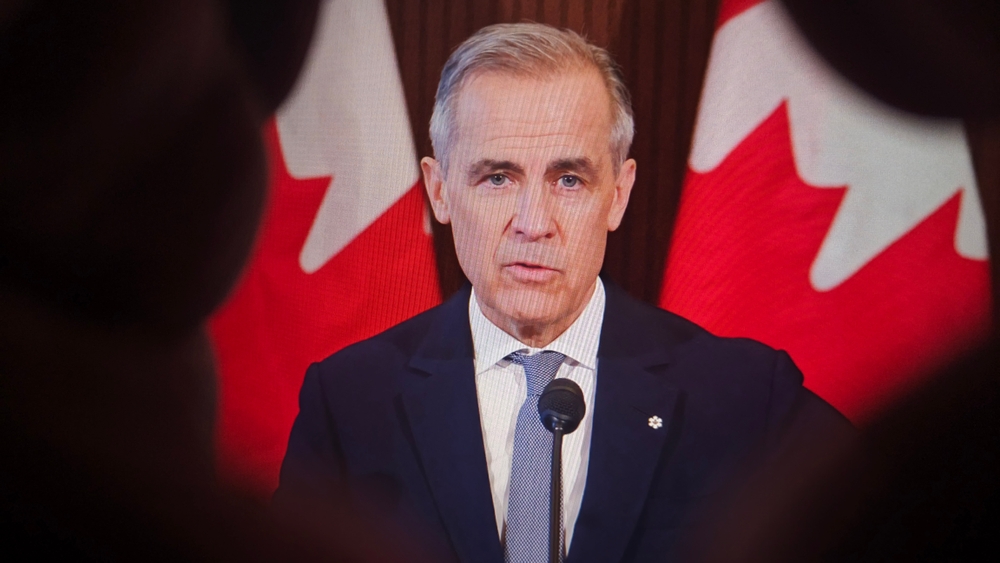
A Message To British Columbia
Prime Minister Mark Carney used a visit to British Columbia to argue that Canada must move faster to supply the world with energy and natural resources, even as Premier David Eby remains skeptical of another oil pipeline through the province.
Speaking to a business audience at the Greater Vancouver Board of Trade before meeting Eby, Carney said the world is facing an energy crisis and that Canada can be part of the solution because it is a stable and reliable supplier in an increasingly unstable global environment.
A Three-Dimensional Energy Crisis
Carney said recent global shocks have threatened access to several forms of energy, leaving many countries exposed. He pointed to the conflict in Iran, which has driven fuel prices higher and disrupted supplies, including a significant portion of Qatar’s gas.
While acknowledging the existential challenge of climate change, Carney said governments must also focus on affordability and energy abundance. He described the current situation as a three-dimensional energy crisis involving security, cost and sustainability.
Pipeline Plan Remains Controversial
The prime minister framed his broader energy agenda as a way to strengthen Canadian independence and economic growth at a time when the U.S. trade war has damaged key sectors. His plan includes faster project approvals, changes to clean energy policies and support for a new oil pipeline to the Pacific.
Eby has been sharply critical of the memorandum of understanding between Carney and Alberta Premier Danielle Smith. He accused the federal government of rewarding Smith’s pressure tactics by adjusting the industrial carbon tax framework and supporting Alberta’s push for a West Coast pipeline.
Carbon Capture Becomes A Condition
Carney told the Vancouver audience that any new pipeline would only move forward if the Pathways carbon capture and storage project is built to reduce emissions. He also said Indigenous peoples must be consulted and should receive economic benefits if the project proceeds.
While Carney had previously said the British Columbia government would need to agree before a pipeline could advance, he said Wednesday that the province must share in substantial economic and financial benefits from the project. He did not explicitly repeat that provincial agreement would be required.
Ottawa Warns Against Delays
Carney pushed back against criticism that Ottawa is spending too much time on Alberta’s pipeline proposal. He said nearly one-third of the major projects his government has fast-tracked for approval come from British Columbia.
However, he warned that if projects stall in the province, the federal government will focus more attention elsewhere in Canada. His message was that Ottawa wants to move quickly on projects tied to affordability, sustainability, independence and prosperity.
Eby Draws A Line On Tankers
Eby said British Columbia wants its fair share of federal investment and wants provincial priorities addressed. He also emphasized that energy development must go hand in hand with environmental protection.
The premier made clear that lifting the oil tanker ban on the northern coast of British Columbia is a non-starter. While he opposes a northwest coast oil pipeline, he has supported natural gas development, including the LNG Canada Phase 2 expansion, as well as mining projects in the province.
Poilievre Says Ottawa Is Too Slow
Conservative Leader Pierre Poilievre criticized the Liberal government, arguing that it is not moving quickly enough to get Canadian energy to overseas markets. He called for the removal of the industrial carbon tax and a reduction in lengthy regulatory reviews.
For investors and policymakers, the dispute highlights the central tension in Canada’s energy strategy: how to accelerate major resource projects while managing climate commitments, Indigenous consultation, provincial opposition and economic pressure from global energy demand.