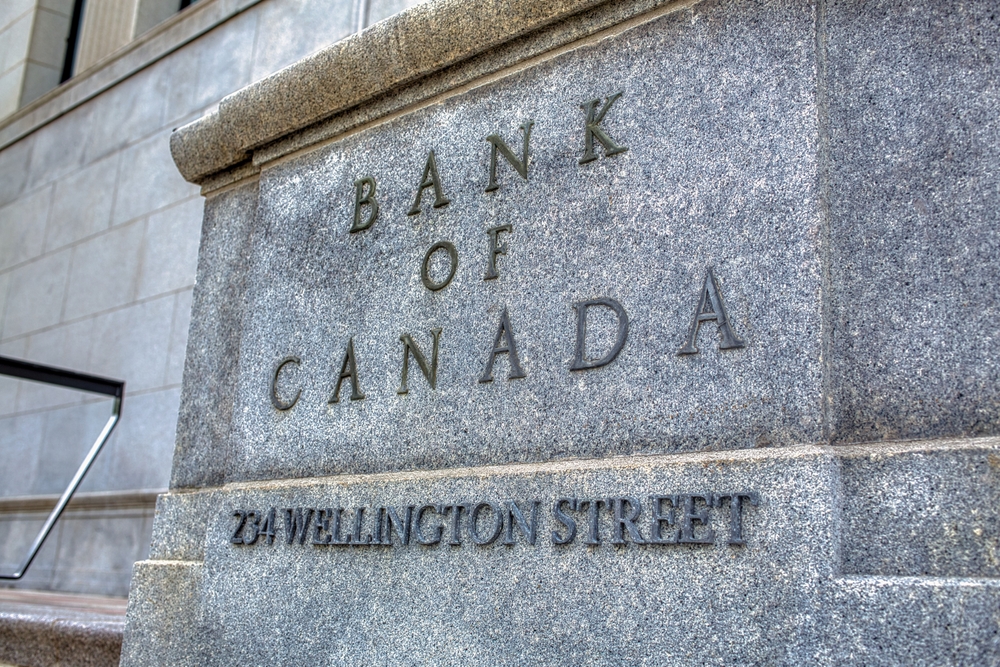
Canadian bank stocks have historically struggled during periods of rising interest rates, but some analysts believe a potential Bank of Canada rate hike before the end of the year could have a different impact this time as Canada pushes to expand key industries and attract up to $1 trillion in investment.
The U.S. Federal Reserve raised its benchmark interest rate by 25 basis points last week to a range of 3.75% to 4% as it attempts to contain inflation linked to the conflict in Iran and disruptions to energy supplies.
The Bank of Canada has kept its key interest rate unchanged for seven consecutive meetings, but it has warned that inflation risks have increased due to geopolitical uncertainty. As a result, expectations of a possible rate increase before year-end have grown.
Why higher rates create challenges for banks
Higher interest rates can initially benefit banks by improving profit margins. However, they can also slow loan growth and increase credit losses as consumers and businesses face higher borrowing costs.
According to analysis from the Canadian Imperial Bank of Commerce, Canadian bank stocks declined by an average of 24% during the seven major rate-hiking cycles since the early 1980s before eventually recovering.
“The average drawdown from peak to trough across those seven time periods was 24% for the Canadian banks, with a range of minus 14% between 2004 and 2006 to minus 35% between 1986 and 1989,” CIBC analyst Paul Holden said in a note.
The average decline lasted about eight to nine months. During the same periods, the TSX fell 18% on average, while the S&P 500 declined 16%.
Investment cycle could change the outlook
National Bank of Canada analyst Gabriel Dechaine said the negative effects of a rate hike could outweigh the benefits for banks, but traditional risks need to be viewed within Canada’s current economic environment.
He noted that loan growth, a major driver of bank profitability, slowed after the Bank of Canada began raising rates. Loan growth declined from 14% in 2022 to 7% in 2023 and 4% in 2024.
However, Dechaine said the federal government’s focus on expanding natural resources, defence and strategic industries could create a new investment cycle that supports credit growth.
“A potential capex super cycle may stimulate credit growth that defies conventional wisdom,” he said.
While consumer lending could face pressure, Dechaine believes commercial and wholesale lending could accelerate as businesses invest in large-scale projects.
He added that if Canada’s economy is supported by long-term infrastructure and industrial projects, higher rates could result in a sustained period of elevated credit losses rather than a sharp increase in defaults.
Analysts favor select banks
Rather than investing broadly across the banking sector, analysts recommend focusing on individual institutions that may be better positioned in a rising-rate environment.
Dechaine highlighted Toronto-Dominion Bank, citing its stronger net interest margins compared with other members of Canada’s Big Six banks when rates began rising in 2022.
“Not only does the bank offer relatively stronger net interest margin upside in a rising-rate environment, but it also has ample balance sheet capacity to support a potential surge in domestic credit demand,” he said.
CIBC analyst Paul Holden suggested investors consider adding exposure to more defensive banking names, specifically Royal Bank of Canada and TD.