Economic growth resumes as uncertainty remains high
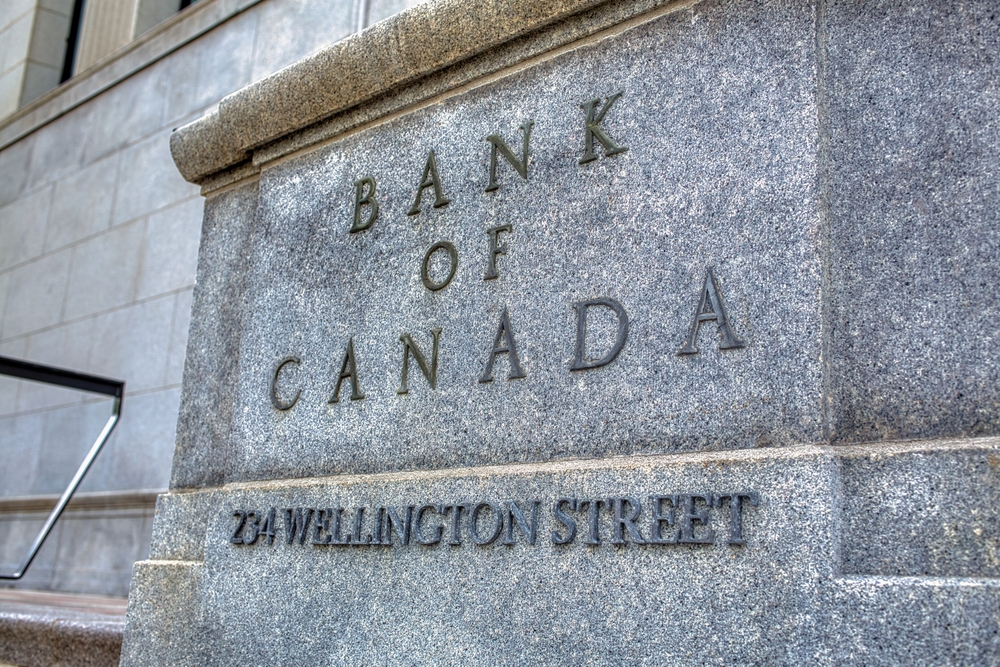
Canada’s economy showed signs of recovery in the second quarter of 2026, but the Bank of Canada says uncertainty surrounding U.S. trade policies and geopolitical tensions means monetary policy must remain flexible.
The central bank’s governing council reached this conclusion during discussions before its July 15 decision to keep interest rates unchanged at 2.25%.
Canadian economy rebounds after weak period
Members of the governing council noted that Canada’s economy had faced a prolonged period of weakness, with no growth recorded between the first quarter of 2025 and the first quarter of 2026.
Trade uncertainty, tariffs and negotiations surrounding the Canada-United States-Mexico Agreement (CUSMA) contributed to excess economic capacity and weighed on business confidence.
However, recent indicators showed that the economy began improving in the second quarter of 2026. The recovery was considered broader than previous periods, with growth no longer relying mainly on consumer spending and government support.
Exports and investment support economic recovery
The Bank of Canada highlighted renewed export growth as a positive sign. Business investment is also expected to strengthen in the near term, supported partly by increased activity in the oil and gas sector.
Labour market conditions have also improved slightly. Data from the Labour Force Survey showed that employment growth resumed in May and June, although the job market remains weak, with unemployment staying elevated at 6.5%.
Growth forecast improves but risks remain
The governing council expects Canada’s economy to grow by approximately 2.5% in the second quarter of 2026. For the full year, the central bank forecasts GDP growth of 0.7%, followed by expansion of 1.8% in both 2027 and 2028.
Despite the recovery, policymakers warned that uncertainty remains significant and could affect future economic performance.
Inflation expected to continue easing
The Bank of Canada expects inflation to gradually decline in the coming months, assuming oil prices continue to moderate.
The central bank projects inflation to fall to around 2.5% during the second half of 2026 before returning close to the 2% target in 2027 and 2028.
However, renewed conflict in the Middle East could create additional inflation pressures if energy prices rise again. Higher fuel costs could eventually spread to other goods and services across the economy.
Trade tensions and geopolitical risks remain concerns
The governing council identified several risks that could affect Canada’s economic outlook, including continued uncertainty from annual CUSMA reviews and the possibility of additional U.S. tariffs.
Members also highlighted risks from weaker consumer spending if labour market conditions deteriorate further. Lower business investment could reduce productivity and limit Canada’s ability to grow without increasing inflationary pressures.
Bank of Canada keeps policy flexible
The council agreed that the current interest rate level was appropriate to support the economic recovery while bringing inflation back toward its target.
However, policymakers emphasized that they will continue monitoring economic data closely and are prepared to adjust monetary policy if conditions change.
“Growth was resuming and inflation was easing,” the summary of deliberations stated, while noting that uncertainty remains elevated regarding the sustainability of the recovery.