
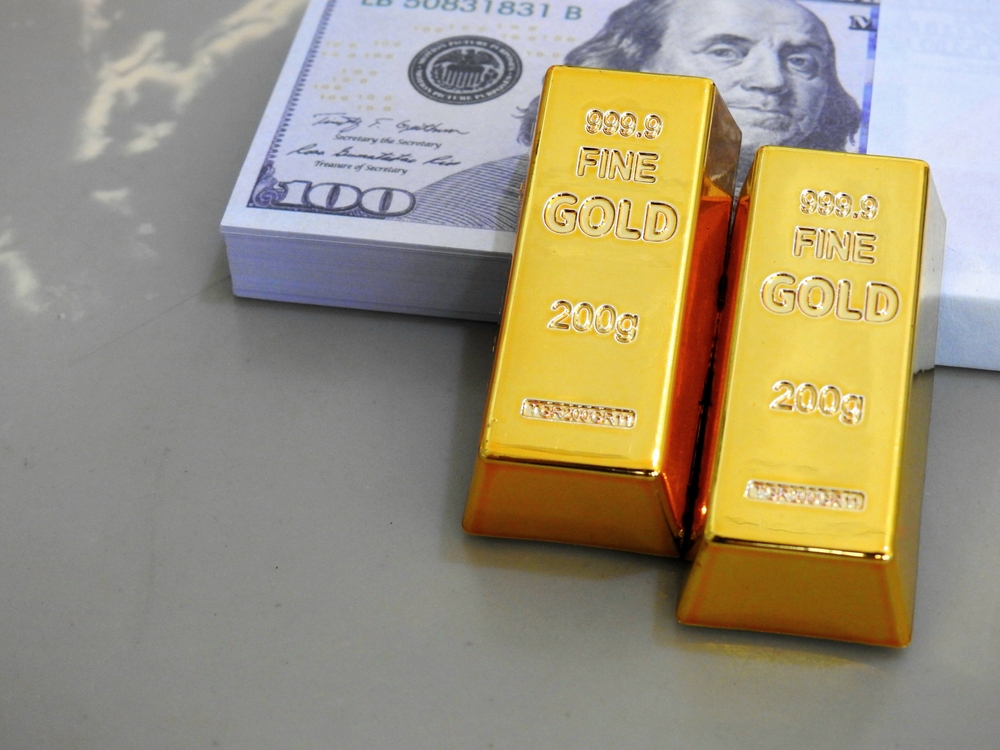
Precious metal struggles to defend $4,000 support
Gold is ending the week lower despite signs that inflation pressures are easing, with the precious metal attempting to maintain support around the key $4,000 per ounce level. Analysts warn that renewed military tensions in the Middle East and disruptions in global energy markets could continue weighing on sentiment.
Spot gold last traded at $4,017.30 per ounce, marking a weekly decline of 2.5%.
Oil prices revive inflation concerns
Recent inflation data initially provided relief to gold markets. June consumer price figures showed a significant slowdown in price growth, reducing concerns that the conflict involving Iran was creating a lasting inflationary shock.
However, analysts caution that the improvement may not last as oil prices have climbed back above $80 per barrel and geopolitical tensions continue to intensify.
The renewed pressure on energy markets has increased expectations that inflation could remain elevated, potentially limiting the Federal Reserve’s ability to reduce interest rates.
$4,000 becomes a critical level for gold
Chris Gaffney, President of World Markets at EverBank, noted that gold has fallen below $4,000 per ounce four times over the past month, although broader support has remained intact.
“The $4,000 price level is a major psychological price point for individual investors and if it breaches this level and continues to fall, we could see gold go into a deep short-term correction,” Gaffney said.
He added that upcoming US inflation data will be essential for determining the next direction for gold prices. If oil prices avoid another significant increase, continued improvement in inflation figures could reduce expectations of further Federal Reserve tightening and support bullion.
Analysts warn of additional downside risks
Gold has already experienced a correction of almost 30% from its January record high, meaning much of the negative sentiment may already be reflected in prices. However, analysts say continued uncertainty could create additional pressure.
Waleed Said, technical analyst at GivTrade, said the main short-term risks include higher bond yields, a stronger US dollar and reduced expectations for interest rate cuts.
According to Said, markets have already absorbed significant negative developments, but have not fully priced in the possibility of prolonged inflation or additional Federal Reserve tightening.
Despite these risks, he emphasized that gold’s long-term outlook remains positive.
“This is still a correction, not yet a breakdown in gold’s longer-term trend,” Said said.
Gold remains closely linked to energy markets
Neil Welsh, Head of Metals at Britannia Global Markets, highlighted the strong relationship between gold prices and oil prices in the current environment.
If energy costs continue rising, inflation pressures could force the Federal Reserve to maintain higher interest rates for longer, creating additional challenges for non-yielding assets such as gold.
Welsh said a recovery in gold would likely require either stronger economic data that reduces inflation concerns or clearer indications that central banks are approaching the end of their tightening cycles.
Fed expectations continue to weigh on bullion
Lukman Otunuga, Senior Market Analyst at FXTM, said the short-term trend for gold remains negative as markets increasingly price in the possibility of another Federal Reserve rate increase.
“With the Strait of Hormuz closed again, the threat of a renewed supply crunch has stoked inflation fears, lifting the dollar and Treasury yields,” Otunuga said.
Higher interest rates and stronger bond yields typically weigh on gold because the metal does not generate income compared with interest-bearing assets.
According to Otunuga, $4,000 remains the key support level. A decisive break below this threshold could open the way toward $3,950 and then $3,900, while a successful defense of the level could allow gold to target $4,100 again.
Long-term outlook remains supported
Simon-Peter Massabni, Head of Business Development at XS.com, believes much of the recent negative sentiment has already been priced into gold.
He pointed to several structural factors supporting the metal over the long term, including continued central bank purchases, geopolitical uncertainty and demand for protection against inflation and sovereign risks.
Massabni said the important question is not whether gold’s long-term trend has ended, but rather how much of the current negative news has already been reflected in prices.
He identified the $3,950 to $3,940 range as an important support area that could attract renewed buying interest if investors conclude that geopolitical risks are becoming more damaging to global growth than to inflation.
Markets await central bank signals
Analysts agree that gold’s next major move will depend heavily on signals from central banks regarding future interest rate policy.
If the US economy shows signs of slowing or energy-driven inflation pressures ease, markets could begin pricing in rate cuts again, creating renewed support for gold.
Massabni said gold appears to be entering an accumulation phase, potentially positioning the metal for another move higher if market conditions improve.
Geopolitical risks remain the main focus
With a relatively light economic calendar ahead, traders are expected to remain highly sensitive to developments surrounding the Iran conflict and global energy markets.
The main economic event next week will be the European Central Bank’s monetary policy meeting.
Economists expect the ECB to keep interest rates unchanged, although the possibility of a September rate increase is expected to remain open.
TD Securities analysts said the ECB is likely to maintain its current stance after raising rates in June, while leaving room for a potential September adjustment during its press conference.