


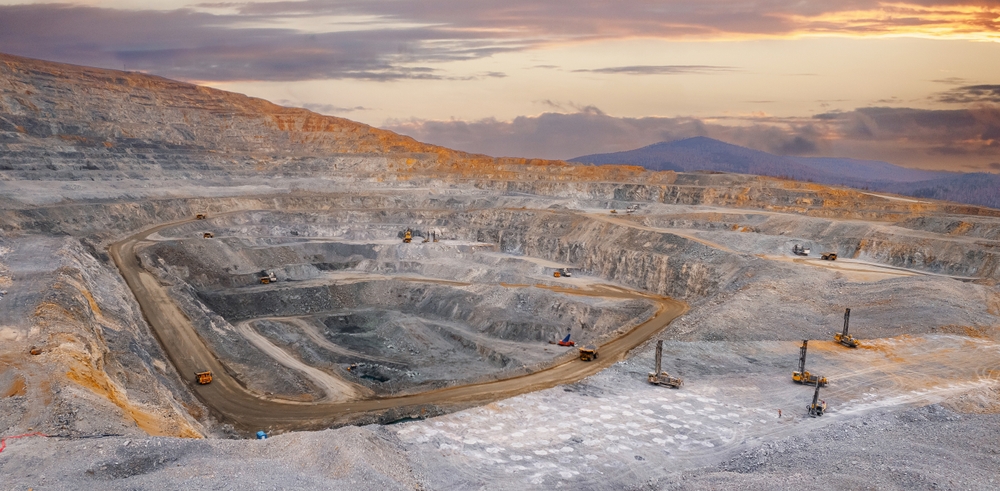
Critical One Energy aims to strengthen North America’s critical minerals network amid growing demand
A Canadian mining company is positioning its antimony project in Ontario as a potential contributor to the future United States defence supply chain as North America works to reduce its dependence on China for critical minerals.
Toronto-based Critical One Energy is conducting exploration work at its Howells Lake antimony-gold project in northwestern Ontario while seeking support from the U.S. government.
The company is currently carrying out a $9-million drilling program designed to expand its resource base and help rebuild a North American supply chain for antimony, a mineral considered strategically important for defence and industrial applications.
US seeks alternatives to China’s antimony dominance
The push comes as the U.S. government increases efforts to develop domestic mining and processing capabilities for critical minerals after China introduced stricter export controls on antimony.
Those restrictions contributed to a significant increase in antimony prices and highlighted the vulnerability of supply chains that rely heavily on a single country.
Critical One Energy CEO Duane Parnham said the company is working to address a supply chain issue that has developed over decades.
“We’re strategically trying to fix a problem that’s 40-plus years in the making, and that is this broken supply chain that North America is endeavouring to repair,” Parnham said.
Former US general joins project strategy team
To strengthen its case for potential U.S. defence contracts, Critical One Energy appointed retired U.S. Army General Charles A. Flynn as a strategic advisor.
Flynn said North America currently lacks sufficient processing capacity for many critical minerals and must work with allies to create more reliable supply networks.
“We need to do it with our friends, allies, partners and neighbours in the Western Hemisphere,” Flynn said.
According to Flynn, antimony is especially important because it is used in defence applications including ammunition primers and ignition systems.
However, he emphasized that discovering a mineral deposit is only the first step.
“We have to mine it, separate it, refine it… and then bring that finished product to the defence industry,” he said.
Building a North American critical minerals supply chain
The U.S. government has already committed funding toward rebuilding the antimony supply chain.
Earlier this year, the government awarded US$27 million through the Defense Production Act to U.S. Antimony Corp. It also provided US$80 million to Perpetua Resources for a domestic antimony trisulfide supply chain project in Idaho designed to support U.S. military needs.
Parnham said Canada also has an opportunity to strengthen its position in the critical minerals sector by investing in domestic processing rather than exporting raw materials.
“Let’s try and value-add. Let’s repair the supply chain in Canada. Let’s create jobs. Let’s create an economic environment whereby the critical minerals become more of a Canadian, NATO, U.S. play,” he said.
Howells Lake project expands through drilling
The Howells Lake antimony-gold project remains in the exploration phase and does not yet have a mining permit or confirmed production timeline.
The project is based on a historical resource estimate that identified approximately 48 million pounds of antimony through drilling conducted between 1978 and 1984.
Critical One Energy acquired full ownership of the project and has been working to update and expand the historical resource through its current drilling campaign.
The company is approximately halfway through its $9-million drill program after completing 34 holes.
Recent drilling has produced several high-grade results, including an interval of four metres grading 70.2% antimony and another section measuring 4.17 metres grading 27.35% antimony.
Parnham said the company believes the project benefits from near-surface mineralization and efficient processing potential.
Ontario location could support future development
Critical One Energy says the Howells Lake project benefits from its location near Ontario’s emerging critical minerals sector.
The project is approximately 120 kilometres from the Ring of Fire, a major critical minerals region that has received a $1 billion government commitment for infrastructure development.
Parnham described the area as the “Outer Ring of Fire” because of its position within the broader development corridor.
He said improving infrastructure in the region could make it easier to transport materials to market in the future.
Critical minerals supply chain will take years to rebuild
Industry leaders expect North America’s critical minerals supply chain to require significant time and investment before it becomes fully established.
Flynn estimated that rebuilding processing capacity could take five to seven years, with a complete recovery potentially requiring more than a decade.
“This is not going to be solved in one election cycle, one administration cycle or one funding cycle,” he said.
He added that years of limited exploration investment have left the industry struggling to quickly respond to rising demand.
However, Flynn said renewed attention on critical minerals is creating new opportunities for companies involved in exploration and development.