
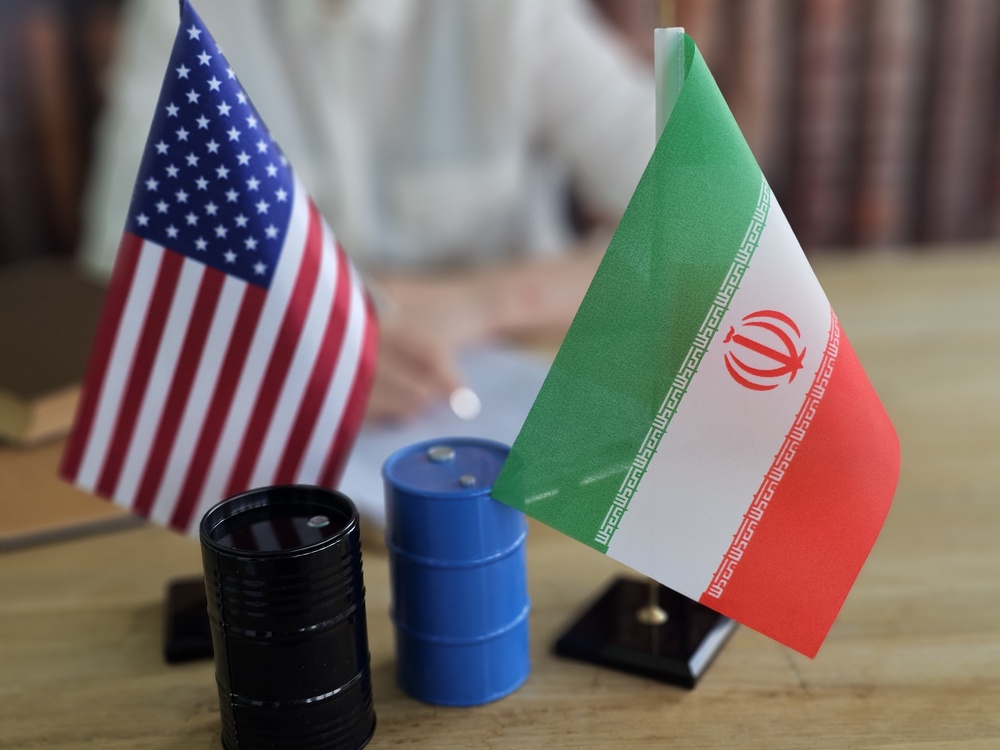
Market optimism clashes with supply concerns
Oil prices have retreated sharply in recent weeks, moving close to levels seen before the war as investors respond to a fragile ceasefire between the United States and Iran and ongoing diplomatic efforts to secure a more durable settlement.
Commodity strategists, however, warned Monday that the market may be pricing in too much optimism. They argue that major supply risks remain unresolved, especially around shipping through the Strait of Hormuz.
Strait traffic remains far from normal
Analysts say vessel activity through the Strait of Hormuz is unlikely to return quickly to pre-war levels, even though some traffic has resumed after the US-Iran ceasefire agreement.
Nikos Petrakakos, managing director of investments at Tufton Investment Management, said many shipping companies remain reluctant to send vessels through the key energy corridor. The concerns include uncertainty around the peace framework, possible sea mines and elevated war-risk insurance costs.
He said there is “some more motion going on”, but traffic is still “nowhere near being back to where it was”.
Brent falls far below wartime peak
International benchmark Brent crude futures traded at $72.45 per barrel at 8:42 a.m. ET on Monday.
That level is dramatically below the wartime high of more than $188 per barrel reached in late April, reflecting the market’s belief that the most acute phase of the conflict may have passed.
Still, strategists argue that lower prices do not mean the physical oil market has fully normalized.
Shipping costs remain a major obstacle
Amrita Sen, founder and director of research at Energy Aspects, said markets are underestimating how far shipping conditions remain from their previous state.
She said vessels that had been trapped in or near the Strait are now moving through, but the larger challenge is convincing new shippers to enter the area.
Sen said shipping costs remain “incredibly high” and that there are still not enough companies willing to send vessels back into the waterway.
Sanctions risk complicates coordination
Strategists do not expect a formal toll system for vessels in the Strait of Hormuz to emerge. Even so, they believe Tehran may continue trying to assert some influence over how ships move through the chokepoint.
Petrakakos said any arrangements involving possible tolls or coordination with Iran remain informal and inconsistent. Most shipping companies are avoiding direct engagement because of the risk of violating sanctions.
He described formal coordination with Iran as a “slippery slope” that could later expose companies to penalties.
Some vessels obscure their locations
Petrakakos said some operators appear to be using less transparent methods, including switching off transponders to make vessel locations harder to track.
Before the conflict, Iran had little control over what moved through the Strait of Hormuz, he said. That balance has now changed, and he does not expect Tehran to fully return to its previous position.
He said Iran may continue pushing for some form of coordination, attempting to treat the Strait more like a canal with managed passage, similar in concept to the Suez Canal or Panama Canal.
Official tolls face strong resistance
Sen said a formal toll mechanism would not be acceptable to Gulf Cooperation Council countries or Western companies.
She said the question of fees is linked to Iran’s need to bring funds back into the country for post-war reconstruction.
In her view, Iran is using its leverage to signal that it intends to influence shipping, particularly through the southern lane. Western companies, she added, would not be allowed to pay such a toll.
Insurance market may take months to recover
Petrakakos said stranded vessels may continue to exit the area gradually, but insurers are still far from comfortable providing normal cover for ships entering the Strait to collect cargo.
He said it could take months before insurance conditions begin to improve meaningfully.
Insurers will need to see that the agreement is more than a written commitment. They will want evidence that the ceasefire is being implemented and remains stable before reducing premiums and restoring broader coverage.
He compared the situation with the insurance response to Houthi attacks in the Red Sea, where risk premiums remained elevated even after some signs of easing.
Oil vessels may not get automatic priority
Petrakakos also warned against assuming that oil and gas vessels will always receive priority through the Strait.
Other cargoes, including high-value finished goods carried on container ships, may also be considered commercially or strategically important.
Dry bulk vessels may face a different calculation because they usually carry lower-value commodities. For those ships, insurance costs may represent a smaller share of the total cargo value.
Iran’s leverage remains central for oil markets
Aldo Spanjer, head of commodity strategy at BNP Paribas Markets 360, said Iran’s position in the Strait of Hormuz remains one of the most important issues for oil markets.
His base case is that Iran can eventually give up formal control over Hormuz, including any toll system. He said the toll issue is mainly about income, and that revenue could be obtained through other methods.
For oil traders, the main question has shifted from immediate supply disruption to how quickly depleted inventories can be rebuilt.
Importers expected to rebuild stocks
Spanjer said the market narrative has moved toward the need to refill inventories that were drawn down during the crisis.
He expects importers around the world to hold higher stock levels after the conflict exposed vulnerabilities in energy supply routes.
That rebuilding demand could help absorb additional barrels if more oil begins flowing into the market under the current memorandum of understanding.
BNP Paribas keeps $80 target
Spanjer said his year-end oil target remains $80 per barrel. He believes extra supply can be absorbed by buyers seeking to rebuild inventories.
If the memorandum of understanding holds and more flows enter the market, he expects prices to rebound modestly because there is enough capacity to absorb the barrels.
That outlook points to a relatively range-bound market rather than a renewed surge or a sharp collapse.
Oil seen between $75 and $85 in 2027
Looking further ahead, Spanjer expects oil to trade between $75 and $85 in 2027.
Once inventories have been restored, he sees more limited upside risks. He said he does not want to place prices above $85 because buyers may be unwilling to refill stocks at that level.
At the same time, he is reluctant to forecast prices below $75 because opportunistic buying remains strong in the market.
For now, oil prices may have fallen close to pre-war levels, but strategists warn that insurance, shipping behavior, sanctions risk and Iran’s role in Hormuz could keep the market vulnerable for months.