
Recession Talk Returns In Canada
The word “recession” dominated economic and political conversations in Canada this past week.
Recent data has offered a mixed picture of the Canadian economy, with some analysts arguing that the country may have entered a technical recession while others warn that the evidence is not strong enough to make that call.
Why The Debate Started
The discussion began after Statistics Canada released real gross domestic product figures for the first three months of the year.
On a quarter-over-quarter basis, the change was so small that StatCan described it as essentially flat, meaning there was no statistically meaningful change in real GDP.
Annualized Data Triggered Concern
Economists often annualize quarterly GDP figures when assessing economic momentum.
That process can magnify small changes, and in this case the annualized figure showed a 0.1% decline in real GDP after a 1% drop in the fourth quarter of last year.
What Is A Technical Recession?
Two consecutive quarters of declining GDP are often used by some analysts as the definition of a technical recession.
However, many economists consider that label too narrow because it focuses on one indicator rather than the broader condition of the economy.
Bank Of Canada Urges Caution
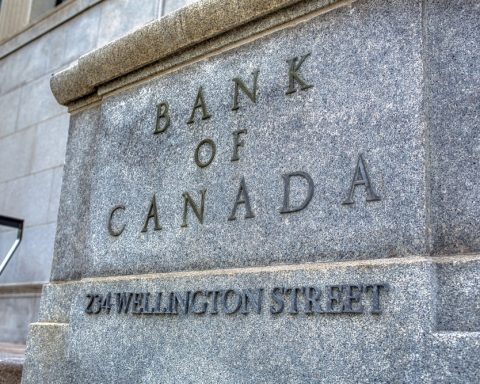
Bank of Canada senior deputy governor Carolyn Rogers warned MPs this week not to place too much weight on the technical definition.
She said the need to use the word “technical” itself shows that analysts should look beyond one GDP number before concluding that Canada is in recession.
A Broader Definition Matters
A more widely accepted definition of recession looks for weakness that is pronounced, widespread and persistent.
That means not only declining GDP, but also job losses, weaker household spending and difficult operating conditions across many sectors of the economy.
Economists Say One Signal Is Not Enough
Randall Bartlett, deputy chief economist at Desjardins, said two quarters of contracting GDP can be necessary but is not sufficient to declare a recession.
In other words, the latest GDP figures raise concern, but they do not automatically prove that Canada is in a broad economic downturn.
Conservatives Blame The Liberals
The federal Conservatives have seized on the GDP data and blamed Prime Minister Mark Carney and the Liberal government for what they describe as a full-blown recession.
Conservative Leader Pierre Poilievre and other MPs have also pointed to rising food bank usage, consumer insolvencies and job losses in the first four months of the year as evidence that government policy has hurt the economy.
Liberals Avoid The Recession Label
The Liberals have largely avoided using the word recession while defending their economic record.
Carney acknowledged that the latest GDP figures show some weakness, but also highlighted encouraging signs such as stronger business investment in machinery and equipment.
Carney Points To Economic Transition
The prime minister argued that lower immigration and reduced government spending are weighing on growth.
He also said Canada’s effort to reduce its dependence on the United States will take time, and that economic data may remain uneven while that transition unfolds.
No Official Recession Arbiter
In Canada, recessions are not declared by the federal government, the Bank of Canada or any official agency.
The closest traditional arbiter is the C.D. Howe Institute’s Business Cycle Council, which plays a role similar to the National Bureau of Economic Research in the United States.
C.D. Howe Says It Is Too Soon
The Business Cycle Council weighed in on Friday and said it was too early to describe Canada’s economy as being in recession.
The council noted that declines must be pronounced, pervasive and persistent to qualify, and it concluded that the current downturn does not yet meet that standard.
April And May Data Complicate The Picture
Statistics Canada’s May 29 GDP report also projected a rebound in April, which could set up the second quarter for a return to growth.
A week later, the agency reported a surprise gain of 88,000 jobs in May, a result many economists said should weaken the recession argument.
What GDP Measures
Gross domestic product measures the total value of finished goods and services produced in a country over a given period.
It is widely used as a broad gauge of economic health, even though it does not capture every part of the economy perfectly.
First-Quarter GDP Was Mixed
StatCan said first-quarter GDP was held back by rising gold imports and declining business investment.
Those factors were offset by higher household spending and firms building up inventories, leaving GDP essentially flat compared with the previous three months.
Recent Data Is Unusual
Bartlett described the recent data as idiosyncratic because the economy is adjusting to U.S. tariffs and shifting geopolitical conditions.
He also noted that GDP can be volatile and is often revised by Statistics Canada months or even years after initial publication.
One Number Is Not Enough
Because GDP data can be revised, Bartlett said analysts should be cautious about making a recession call based on one report.
He argued that it would be premature to rely too heavily on a number that could later be revised upward or downward.
Why GDP Still Matters
Despite its flaws, GDP remains useful because it tracks broad economic trends.
Concordia University economics professor Moshe Lander compared it to measuring height with marks on a door frame: the exact measurement may not be perfect, but the trend still tells an important story.
GDP Connects To Wages And Public Services
When GDP rises, businesses are usually producing more effectively, which can support wage growth.
A stronger economy also generates more tax revenue for federal and provincial governments, which can help fund public services.
GDP Per Capita Adds Another Layer
Real GDP per capita measures output on a per-person basis and is often used as a rough indicator of whether living standards are improving.
Canada’s real GDP per capita has lagged the United States for years, although it was positive in the first quarter of 2026, partly because of a shrinking population.
Macro Data Can Miss Personal Struggles
Broad indicators such as GDP, inflation and unemployment do not always reflect the daily experience of individual households.
Lander said people increasingly live in a microeconomic world, while GDP is a macroeconomic measure, making it harder for one number to describe the reality of an unequal society.
Why The Label Feels Contested
That disconnect helps explain why recession debates can become emotional and political.
Some households may feel like they have been living through recession-like conditions for years, even if national indicators do not officially show a broad downturn.
Canada’s Economy Remains Unclear
The latest data suggests Canada’s economy is weak, but not clearly in a broad recession.
Flat GDP, tariff uncertainty and soft investment point to real pressure, while stronger employment and signs of an April rebound suggest the downturn may not be deep or widespread enough to meet the traditional recession standard.