Markets React To Mixed Iran Signals
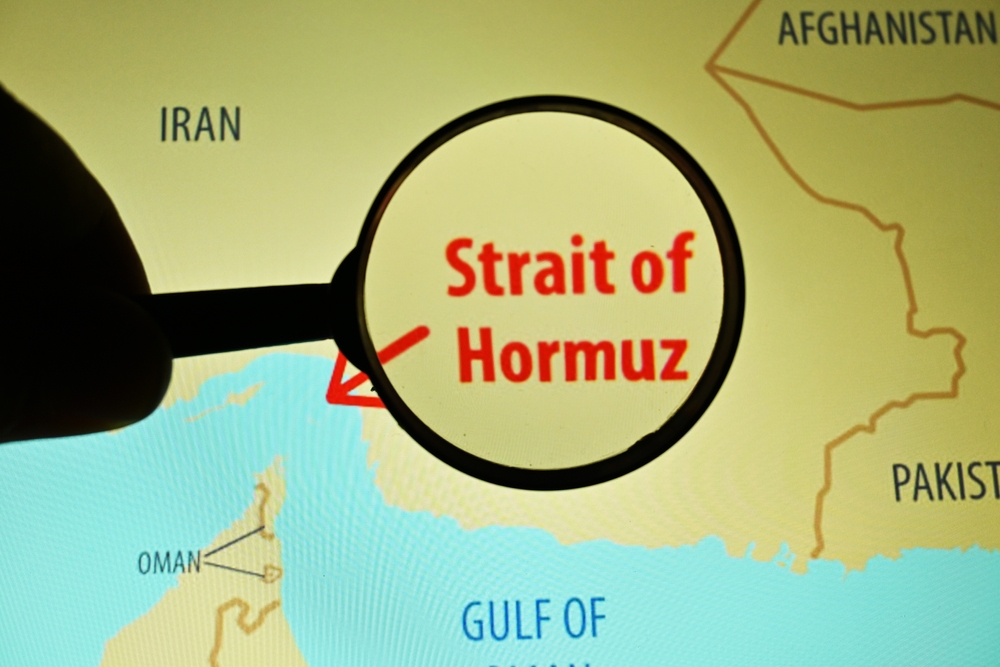
Global oil markets remained volatile this week as investors weighed reports that Iran could seek a permanent fee on ships crossing the Strait of Hormuz as part of any peace agreement with the United States.
Brent crude prices eased on Wednesday, reversing gains from the previous session, while U.S. crude also fell. Traders are trying to balance fresh U.S. strikes on Iran with President Donald Trump’s recent suggestions that a peace agreement may be getting closer.
Brent Falls Back Below $100
Brent crude, the global benchmark most sensitive to Middle East supply disruptions, dropped 2.8% on Wednesday to 98.47 dollars per barrel.
The move came after Iran’s Islamic Revolutionary Guard Corps vowed to retaliate against U.S. strikes, which Central Command described as defensive. The mixed signals have left traders reluctant to take strong positions.
Investors Struggle With Uncertainty
Dave Ernsberger, president of S&P Global Energy, said market participants are hesitant because messaging around the negotiations remains unclear.
The uncertainty centers not only on whether a deal can be reached, but also on what terms may govern the reopening and future operation of the Strait of Hormuz.
A Possible Transit Fee Raises Concerns
One proposal reportedly being discussed would involve Iran and Oman jointly regulating the Strait and charging an “environmental fee” or transit toll on ships passing through the waterway.
Ernsberger said the question is whether governments and market participants would accept any kind of transit fee at all. He argued that the principle of free maritime flow is at stake, along with the precedent such a fee could create.
Iran Denies A Formal Toll
Iranian foreign ministry spokesman Esmail Baghaei said there is no toll, but added that navigation and preservation of the ecosystem in the Strait, the Persian Gulf and the Sea of Oman carry costs.
Details remain limited, but market participants have discussed a possible charge of around 1 dollar per barrel for crude oil transiting the Strait.
A Small Fee Could Still Matter
Ernsberger said a 1 dollar per barrel charge may not be a major burden when oil trades near 120 dollars a barrel.
However, if crude returns to lower levels, such as the 55 dollar range seen in December, the fee would become more significant. It would either be passed through to global buyers or absorbed by producers as part of their export costs.
Shipping Remains Far Below Normal
Although some vessels are still moving through the Strait of Hormuz, traffic remains only around 10% of normal pre-war levels.
Ernsberger said very few crude or product tankers are getting through. Even if 10 vessels pass through in a day, he said only a small number are likely to be oil tankers.
Recovery Could Take Months
Even if a deal is reached and the Strait reopens, analysts warn that oil flows will not immediately return to normal.
Production in Qatar, Iraq and parts of Saudi Arabia could take about two months to normalize. Shipping traffic may not fully recover until the fourth quarter, depending on security conditions and operational backlogs.
Supply Risks Keep Traders On Edge
Amena Bakr, head of Middle East Energy and OPEC+ insights at Kepler, said uncertainty and mixed messages around negotiations are increasing volatility in oil prices.
She said the framework of any potential levy remains unclear. While an optimistic scenario could clear the backlog in about two months, a full return to pre-war supply levels may realistically require a year of recovery.
Hormuz Remains The Market’s Main Focus
About one-fifth of the world’s seaborne oil supply passes through the Strait of Hormuz, making any change to its operation a major issue for global energy markets.
For investors, the key questions are whether the U.S. and Iran can finalize a peace agreement, whether shipping can resume reliably and whether any new fee on transit becomes a lasting cost for global trade.